Topic
Historical Context
11 articles
Articles tagged “Historical Context”

Juventus, Torino and visiting Turin during Italy’s decade of political violence This piece was written by John Irving for issue 40 I spent 1975-76, the third year of my Italian degree course at Edinburgh University, perfecting the language in Italy, in Turin to be precise. I lived in an apartment in Corso Sebastopoli, just up […] The post The Years of Lead appeared first on The Blizzard.
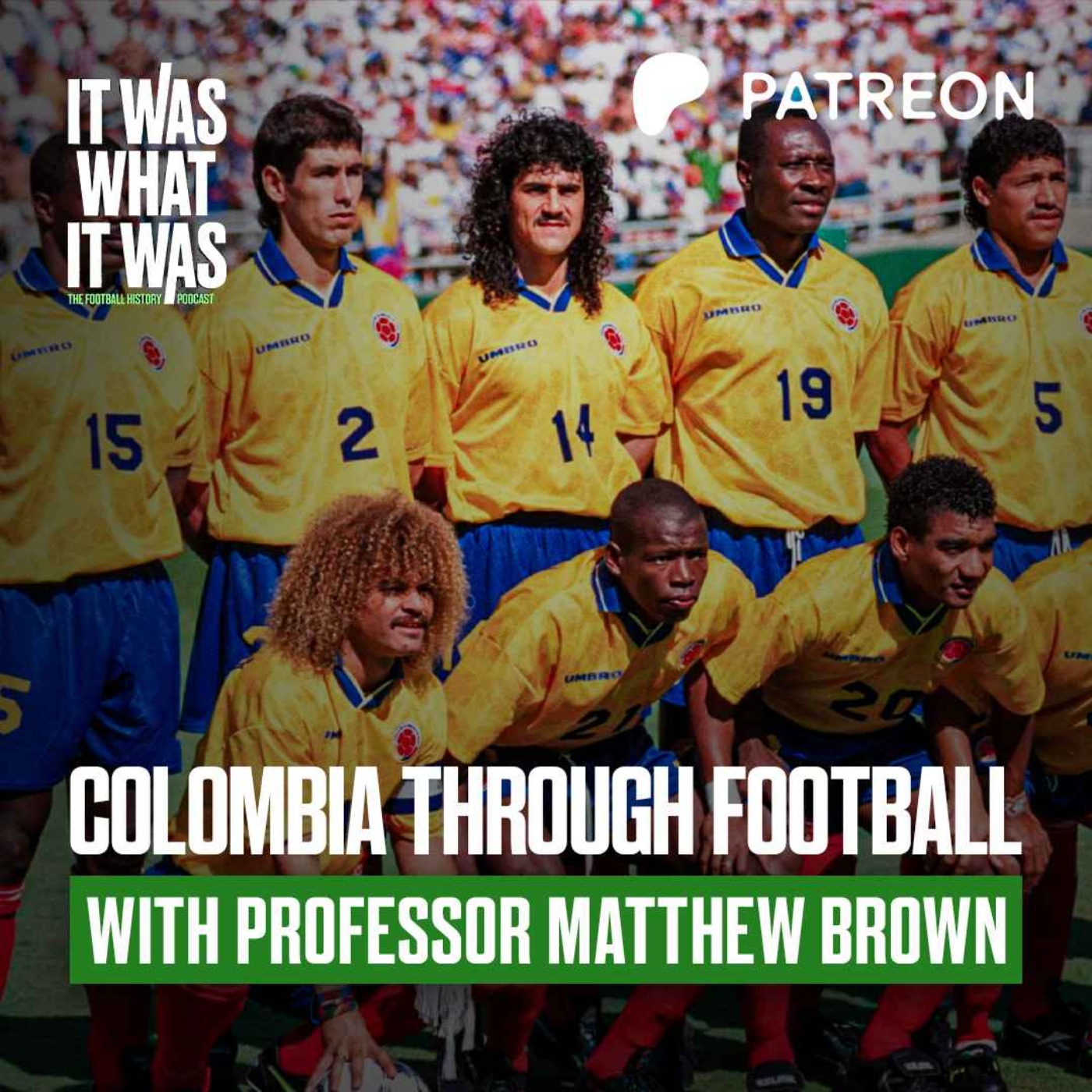
In this sneak peek to a bonus episode of It Was What It Was on Patreon, hosts Jonathan Wilson and Rob Draper are joined by Professor Matthew Brown (University of Bristol) to deepen the series on Andrés Escobar by tracing how Colombian history, political violence and the drug economy intersect with football. Brown rejects Gabriel García Márquez’s claim that three events defined 20th-century Colombia, while explaining why the 5–0 win over Argentina in 1993 became a tipping point for football as a national identity marker. The discussion covers football’s emergence alongside other sporting cultures, the role of sport after the 1948 Bogotazo and during La Violencia, and Colombia’s later shift into guerrilla conflict and cocaine trafficking. They explore cartel money’s social and sporting influence, the effects of Pablo Escobar’s death and subsequent violence, the symbolic damage of Colombia’s 1994 World Cup collapse, Copa América 2001, and how the 2014 team helped build trust during negotiations leading to the 2016 peace deal, while noting ongoing violence tied to the illegal drug trade. You can listen to the full episode on Patreon On Tuesday, Rob Draper and Jonathan Wilson return to round off the Colombia series and bring that story to a close. On Wednesday, on Patreon only, the co-hosts continue the World Cup countdown series with an episode on the 1962 World Cup in Chile, looking back at the tournament and some of its key moments. Then on Friday, also on Patreon only, we look back at when Northern Ireland faced Italy in the 1958 World Cup qualifiers. With Northern Ireland preparing for their 2026 World Cup play-off semi-final against Italy, Rob and Jonathan revisit the meeting where Northern Ireland qualified for their first World Cup and discuss the background to Ireland’s football split in the 1950s. Hosted on Acast. See acast.com/privacy for more information.
Welcome to It Was What It Was, the football history podcast. This week co-hosts Jonathan Wilson and Rob Draper delve into George Orwell's infamous essay on sport, specifically focusing on Dinamo Moscow's 1945 tour of Britain. They explore Orwell's controversial viewpoint that serious sport is akin to 'war minus the shooting,' and delve into the historical and political context of this post-WWII football tour. The discussion covers the tactical innovations introduced by the Soviet team, the media and public's reaction, and the broader implications for international sport and politics. This episode provides an in-depth look at how football can both unite and divide, reflecting on Orwell's critique and its relevance to today's sports culture. 00:00 Introduction: The Dark Side of Sports 01:05 George Orwell's Influence on Sports 01:49 The Political Context of the 1945 Moscow Tour 02:47 The Goodwill Tour: Ideals vs. Reality 05:00 The Soviet Union's Football Strategy 08:23 The Arrival of Dinamo Moscow 21:45 The First Match: Dinamo Moscow vs Chelsea 30:53 The Political Showdown: Arsenal vs Dinamo Moscow 32:31 The Final Game in Scotland 35:56 Soviet Propaganda and the Legacy of the Tour 40:36 Tactical Innovations and English Football's Response 47:36 George Orwell's Critique of Sport 53:18 Football's Role in Nationalism and International Relations 01:00:51 Concluding Thoughts on Orwell and Football Hosted on Acast. See acast.com/privacy for more information.

Our own David Wilson is in Yerevan as the Republic of Ireland get ready to take on Armenia in the second of the World Cup Qualifiers, Here, David checks in from Yerevan describing the journey of getting there, plus he explains some of the other important aspects of the country including some of the more brutal times of the past. This isn't a preview of the actual game, rather more a summation of the country itself, in a social, historical and sporting context. We try to understand why people are so proud of being Armenian, and why their diasporic population continues to make waves across the entire world. Become a member at offtheball.com/join
Welcome to It Was What It Was, the football history podcast. In this episode, co-hosts Rob Draper and Jonathan Wilson bring their second and final part of their series on the Death Match, one of the most mythologized football games of all time. Occurring in Nazi-occupied Kyiv, Ukraine, this match between Start, a team formed mostly of former Dinamo Kiev players, and Flakelf, a Luftwaffe team, has become a symbol of resistance. The hosts discuss the brutal context of the occupation, the complex legacies of the players, and the role football played in these extraordinary historical circumstances. Jonathan Wilson critically examines how much of the narrative is based on verifiable facts and how much may have been post-war Soviet propaganda. This episode provides a nuanced understanding of how football intersected with geopolitics, resistance, and national identity during one of history's darkest periods. 00:00 Introduction to the Death Match Series 01:27 Historical Context: Nazi Occupation and Football 02:26 The Rise of Team Start 03:07 Early Matches and Growing Tensions 04:21 Embarrassing Defeats for Axis Teams 05:28 Public Perception and Propaganda 06:29 The Turning Point: German Concerns 14:13 The First Clash with Flakelf 18:05 Setting the Stage for the Death Match 26:06 The Referee's Influence and Game Dynamics 27:10 Halftime Tensions and Orders to Lose 28:39 Second Half and Controversial Moments 32:35 Post-Match Arrests and Interrogations 35:50 Life in the Prison Camp 43:10 Escape and Kyiv's Liberation 44:33 Legacy and Mythology of the Death Match Hosted on Acast. See acast.com/privacy for more information.
Welcome to It Was What It Was, the football history podcast. This week, co-hosts Jonathan Wilson and Rob Draper delve into the harrowing tale of 'The Death Match,' a match played under Nazi occupation in Ukraine. They explore the brutal conditions faced by Ukrainian footballers, the formation of a remarkable team, and the resonances with modern-day conflicts. In Part One, learn how football resurfaced amidst atrocities, with bakery manager Yosyp Kordyk forming a team from former stars. The discussions cover the political intricacies and personal tragedies, setting the stage for the match itself. Join us for Part Two on Friday, where the details of the game itself and its far-reaching consequences are revealed. 00:00 Introduction to the Yard Brigade 00:26 Welcome to the Podcast 00:53 The Mythologized Football Match 02:44 Escape to Victory and Its Origins 04:16 Introducing Joseph Cordick 05:49 The Nazi Occupation of Kiev 07:37 The Struggles of Mik Trivi 14:21 The Fall of Kiev and Its Aftermath 25:51 Ukrainian Nationalism and Football Under Nazi Occupation 27:34 The Horrors of Nazi Occupation in Kyiv 29:43 Football as a Means of Normalization 30:32 Resistance and Brutality in Kyiv 31:30 Formation of the Start Football Team 33:06 The Struggles and Symbolism of Playing Football 37:16 The First Match and Its Consequences 39:09 The Complexities of Resistance and Collaboration 49:14 The Aftermath and Public Perception 51:07 Conclusion and Teaser for Part Two Hosted on Acast. See acast.com/privacy for more information.
On the day Wales name their 23-player squad for this summers Euros, Football Daily brings you the first episode of a brand new series – ‘Iconic: The Rise of the Women in Red’, with Wales' most capped player Jess Fishlock. After a 50-year ban on women playing football, Wales don’t have an official team until a pivotal meeting with the FAW in the early 1990’s. But even then, the players face playing in handed down, oversized men’s kit and being led by part-time. Subscribe to the series on BBC Sounds now for more episodes – www.bbc.co.uk/sounds/brand/m0023mz7.
This week on It Was What It Was, Rob Draper and Jonathan Wilson look back at one of the most iconic footballing stories of all time: Cameroon’s 1990 World Cup. Jonathan and Rob look at the chaotic preparations behind Cameroon's campaign, discussing last-minute squad upheaval, internal conflicts between teammates, and the unexpected recall of a man who would become a legend: Roger Milla. In the build up to the tournament's opening game against defending champions Argentina, there were turbulent training camps, political interferences, and a complete lack of confidence in the squad. That would all change in the summer to come... Join us on Friday for Part Two. If you’re enjoying the podcast, please subscribe and consider leaving a five-star review to help others find the show. 00:00 Pre-Game Nerves and Disorganization 01:02 Introduction to the 1990 Cameroon Team 01:25 Historical Context of African Teams in the World Cup 02:26 The Dramatic Campaign of Cameroon 1990 04:40 The Goalkeeper Dilemma 07:25 African Football's Struggles and Triumphs 14:37 Colonial Impact on African Football 17:44 Cameroon's Chaotic Road to the World Cup 24:09 African Players in European Football 24:58 Cameroon's Discontent in the 1990s 26:02 The Build-Up to the 1990 World Cup 31:43 Roger Milla's Unexpected Return 40:07 Goalkeeper Rivalries and Team Dynamics 43:33 Pre-Match Chaos and Last-Minute Changes Hosted on Acast. See acast.com/privacy for more information.

With the Spanish World Cup on the horizon and the Argentinian flag being raised in Port Stanley, fears were high that England may not even get to go. Trouble off the field - both historical and hypothetical - would shape the English game in the 1980s. In his brilliant new book 'Go To War: Football On The Brink In The '80s', Jon Spurling brings out both the light and shade of a turbulent decade for the national game. From trouble to tragedy and inflatables to fanzines, he sits down with Martyn to discuss the fan experience of the 1980s. Jon's book can be found here https://amzn.eu/d/c56EFo9 and all good bookshops. If you want to support the podcast or want your episodes without ads and a couple of days earlier then head over to patreon.com/NessunDormaPodcast where you can subscribe for only $3.99 a month. Learn more about your ad choices. Visit podcastchoices.com/adchoices
The anthem, placing this victory in historical context, the eye-gouging incident, Mexican newspapers, Panama's miracle comeback, Canada's win, Jamaica's draw and a little bit on the U20s.
Well, here we are in uncharted Football Ramble territory, as England prepare for a World Cup semi-final with Croatia. We steel ourselves for the game by way of adventures with Keith Allen in Screw Fix, reminiscence of tournaments past and the fev-o-meter going into overdrive. Alongside that we look over an impressive, surgical win from France, enjoy a dig from Fabio Capello and learn to ‘drink more responsibility’. Needless to say, Cristiano has the last laugh. This show is sponsored by bet365 Search ‘Football Ramble’ on social media to find us, and email us here: [email protected] ***Please take the time to rate and review us on iTunes or wherever you get your pods. It means a great deal to the show and will make it easier for other potential listeners to find us. Thanks!*** Further reading Belgium weren’t happy with the way France played: https://www.theguardian.com/football/2018/jul/11/belgiums-thibaut-courtois-and-eden-hazard-hit-out-at-anti-football-france France look to move on from 1998: https://www.independent.co.uk/sport/football/world-cup/france-vs-belgium-world-cup-2018-didier-deschamps-samuel-umtiti-goal-video-watch-1998-final-a8441431.html Can England actually go and do this? https://www.bbc.co.uk/sport/football/44785165 The Football Ramble, the original and best football podcast. Brand new podcasts every single weekday. Hosted on Acast. See acast.com/privacy for more information.