
News linked to South Africa
Around the world, here are the channels you can watch Newcastle United v Bournemouth Live TV. The global TV listings are featured below for local (to you) coverage on Saturday... You can click here to read the full article.

THE 2026 World Cup is edging ever closer with Mexico taking on South Africa in the opening match of the tournament. The co-hosts raise the curtain on the biggest spectacle in sport as the 104-game extravaganza begins in Mexico City. Coincidentally, the reverse of this fixture was the opening game of the 2010 World Cup when South...
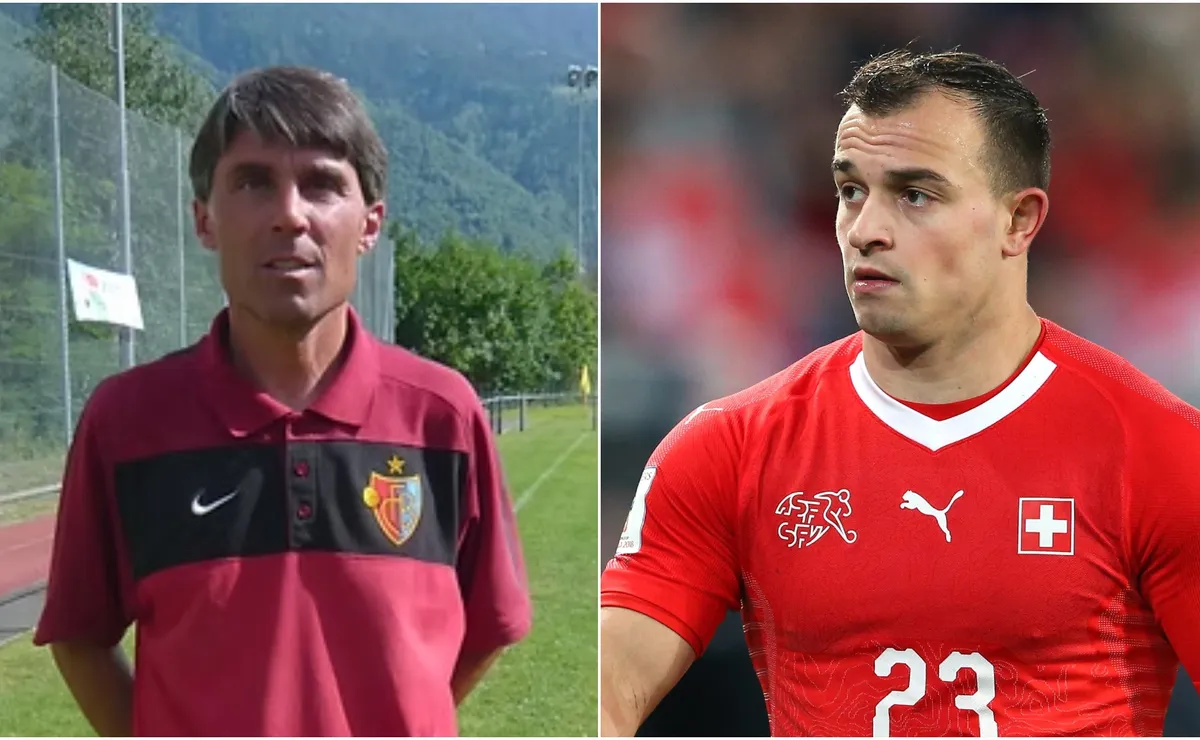
Argentine youth developer Facundo Alvanezzi discusses his 11 years at FC Basel, his role in shaping stars like Granit Xhaka and Xherdan Shaqiri, and why fostering "hunger" and embracing mistakes is the secret to producing elite talent. Alongside the technological leaps of the 21st century, soccer has evolved through the implementation of new instruments and methodologies embraced by clubs across all levels of the game. Yet technology alone does not always translate into better players or better human beings. World Soccer Talk had the opportunity to sit down with Argentine youth developer Facundo Alvanezzi, who spent 11 years at Swiss club FC Basel between 2008 and 2019. Having trained in South America and studied the methods of some of Europe’s most renowned clubs, including FC Barcelona, AC Milan and Bayern Munich, Alvanezzi applied his knowledge to help produce elite talents such as Granit Xhaka, Xherdan Shaqiri and Fabian Schär, among others. A former professional player in Argentina who also played in Italy, Alvanezzi began his coaching career at Aldosivi before departing for Basel in 2008. Moving from scheduled training sessions with limited soccer balls, “compensated by the amount of talent,” to an environment where every youth team trained on a heated pitch, had balls for every player, full kits and access to psychologists, nutritionists and other health professionals represented a dramatic shift in perspective. FC Basel and a commitment to youth development Already proficient in Italian from his playing days, Alvanezzi still had to immerse himself in the cultural and linguistic demands of his new environment, all in service of what he considers the cornerstone of his work: communication. In a single training session, he might move between Italian, French, and German while coordinating multiple groups of young players across state-of-the-art facilities designed to maximize their development. FC Basel’s U-14 squad. “A club like Basel worked with all 14 or 15 age groups all at the same time. The First Division had its own separate pitch. But for everything related to the youth levels from U21 down, everyone had their own respective pitch. Even the littlest ones, the 5 and 6-year-olds, had their own synthetic fields with dimensions suited for 5 or 6-year-olds. Just to give you an idea—no time was wasted there. In other words, time is utilized in a way that enriches you instead of being a deficit that hinders the development of future players.“ Alvanezzi then put into context the remarkable achievement of a small nation punching well above its weight. “You can’t forget that Switzerland has a population of between 6 and 7 million inhabitants, so the emerging talent back then was very scarce. They did an extraordinary market study so that today they have 17, 18, 19, and 20-year-olds—which didn’t happen before—playing and qualified for the next World Cup in the US, Mexico, and Canada. So, basically, everything related to infrastructure and planning… whether you like it or not, having that entire grid set up allowed me—as someone passionate about football who loves being on the pitch—to work peacefully. I knew I had my designated pitch to work with the U15s, the U16s, the U17s,” he added. The role of a youth developer and the cultivation of talent A fluent Spanish speaker, Alvanezzi describes himself as a “formador de juveniles,” a youth developer rather than a coach, drawing a sharp distinction between the two roles: “The developer (formador) teaches and builds; they earn very little, if anything at all. In terms of titles—U14s, U15s, the Reserves… I don’t care about those. The coach (entrenador) is there to train, to play, to compete, to get points, to win a domestic league, a Libertadores, a Euros, a Champions League, or a World Cup. They are two completely different things. That’s why there aren’t many coaches developing players, and there aren’t many developers coaching elite teams.“ Another key principle in his approach is trusting the creative instincts of young players rather than issuing directives, recognizing that the youth phase is when information can have the most profound impact. He pairs this with a cosmopolitan perspective while never abandoning his own core beliefs. Facundo Alvanezzi on the touchline. “In other words: at no point do I impose. I don’t impose knowledge, authority, or didactics—nothing. I seduce. Those are two completely different things. And I try to seduce through knowledge. Because when you have knowledge, you can ‘disarm’ the player; when you explain the how, the when, the where, and the why. Of course, when I go somewhere else, I adapt, but I cannot renounce my genes.“ When he arrived in Switzerland, Alvanezzi found himself surrounded by cutting-edge technology, GPS tracking and gym equipment, yet he remains committed to the idea of developing players “with a ball.” “In player development, I adapted to the systems, but with my own imprint. I carry the Argentine imprint everywhere. It’s this: I watch a player—how he walks—a 5-year-old, a 10, 15, or 20-year-old. I watch him walk. I throw him a ball. I watch him make a couple of touches—juggling in the air, a change of direction. And right then, I realize what that footballer might be capable of. Or not,” he explained. The value of mistakes in youth development Elite clubs increasingly measure the success of their youth teams by silverware, mirroring the pressure placed on the first team. But for Alvanezzi, perfection is not the goal. Forcing young players into rigid systems, he argues, sends them to the first team with significant blind spots, and he views the ability to make mistakes as one of the most valuable learning tools available. “Here are players I can ask to play a football of possession and position. And then there are footballers to whom I have to say, ‘You: control the ball, don’t carry it, and pass it to a teammate.’ Meanwhile, for another player—because I go against the establishment and the system—,” Alvanezzi said. “I believe one of the virtues I have in this vocation of developing players is that I value the error. From the error, I create the virtue of the success. In the context of teaching, I don’t criticize the player; I seduce him. ‘But what if I struggle, I lose the ball, it’s hard for me, and they score on us?’ And what’s the problem? I don’t want my trophies and medals hanging in my house. What good are they to me? If, in the end, I didn’t get any player to move up to the First Division. If I didn’t develop a single player for the first team,” he added. Alvanezzi, who says he has not a single medal or trophy displayed in his home, considers the players he has helped reach the elite level to be his true honors: “Now, my ‘medals’ are an average of 45 to 50 players who reached the top level. Especially at Basel. We had a coach like Thorsten Fink, who helped us a lot and used to play for Bayern Munich. He helped us bring up kids at 16 or 17 years old. I had the pleasure of training players like Yann Sommer, Granit Xhaka, Shaqiri, Breel Embolo, Noah Okafor, Fabian Schär , Eray Cömert, Neftali Manzambi, Raoul Petretta, Cedric Itten—an immense number of players. Those are the medals one gets to hang up.“ He then stressed that the developer’s job demands patience and an embrace of the mistake. “They need to learn to play with the right foot, with the left foot, and have a lot of contact with the ball. When I arrived at Basel and asked for—for example, the squads there are 18 players—I asked for no less than one ball per player. At first, they just looked at me. ‘Why one ball per player?’ Because, what did I achieve over the years? That in an hour and a half, the players went from an average of 200 touches in a standard session… once I integrated the technical and game-based training, that multiplied to 1,400 daily touches with the ball. The more touches you have, the more you polish the errors.“ In an environment dominated by innovation, Alvanezzi believes the fundamentals are often left behind, and his street soccer mentality changed the culture at Basel. “In Europe, ‘soccer practice’ (11v11) doesn’t exist. From Monday to Friday, it’s all small-sided games. Everything. So when I got to Basel, imagine the resistance from the other coaches. They told me, ‘No, Facundo, you’re crazy. The players will get injured; we don’t do that here; everything is small-sided.’ “And I told them, ‘The 11v11 is the symptom for Saturday or Sunday; it’s how you know which player you can count on and which one you can’t. You might think you can count on someone, but on a full pitch, it becomes too big for them, and they become completely disorganized. We need a parameter.’ Well, I implemented it at Basel until it became their own ‘modus operandi’ that on Thursdays, we did the 11v11 practice. The teams started improving exponentially because they were finally playing football not in a 20×20 or 30×30 space, but in 100×65—which is where real football is played,” he added. ‘Hunger’: the defining trait of the players who made it Among the many stars Alvanezzi has helped develop, a common thread runs through the backstories of those who reached the highest level: adversity. Both Xherdan Shaqiri and Granit Xhaka were born and raised in a disintegrating Yugoslavia amid violence before finding asylum in Switzerland. Breel Embolo‘s path was similar, leaving Cameroon with his family before settling in France and eventually Switzerland. That contrast between their upbringing and those of more comfortable peers is precisely what Alvanezzi calls “hunger,” the spark that gave them a decisive edge. “From an early age, when you watch them train—unlike the vast majority of Swiss youth developers who never experienced need—these were kids of struggle. They are born, raised, and developed out of hardship. So, the only possibility they had to emerge—unlike other great Swiss talents I had at Basel who didn’t make it—they weren’t going to make it because they lacked that ‘hunger.’ That potentiality of saying, ‘Through soccer, I am going to help my family; I am going to emerge; I am going to be somebody.‘” Alvanezzi then reflected on the social realities that shaped Xhaka, Shaqiri and Embolo. “They lacked even the most basic conditions in an elite, first-world country. They were segregated because they weren’t Swiss. They are three starters for the Swiss national team who have played in World Cups, but Breel is from Cameroon, and the other two are Kosovar. When society wasn’t integrating them, but they were useful to the national team football-wise, they nationalized them.“ Alvanezzi with Neftali Manzambi, Breel Embolo, and Charles Pickel. He then illustrated how that hunger translates into a measurable competitive advantage. “Genetically, all of that plays in their favor, 80 or 90% more than the well-off Swiss player… That “plus” works in your favor. While they came to training on foot or by tram, the vast majority of players of Swiss origin came every day with their fathers in a different car—a Mercedes-Benz, a Porsche… That factor of having nothing missing ends up working against you. Since you have everything, what am I going to be ambitious about? Playing in a World Cup? I’m not interested. Reaching the first team? If I make it, I make it, and if I don’t, I still have everything,” he stated. A memorable trip to South Africa In 2010, following the World Cup in South Africa, Alvanezzi traveled to the country for fifteen days representing the Swiss U15 national team with Basel at the Danone Nations Cup, competing against teams from Japan, Argentina, China, England, Italy and others. What left the deepest impression on him, however, was not the competition itself but the cultural awakening it triggered among his Swiss players and the youth developers around them. “They didn’t know what it was like for a kid not to have a cell phone, or to walk around barefoot. They couldn’t understand why colored people sat at one table and white people at another because of the legacy of apartheid. All the Swiss kids traveled with the latest cell phones. They would leave half of their plates full of food. And 50 meters away, at the fence in a gated area of the complex, local kids would come to beg for food,” he recalled. FC Basel youth squad in 2010 Danone Cup. “Along with several other Latino coaches, I would gather the leftover food and give it to them. It reached the point where FIFA was going to fine me, because they said I wasn’t allowed to feed the people. And I told them: ‘Why not? It’s the most important thing; they’re hungry. The only one who understood it on that trip was Breel Embolo,” Alvanezzi added. Talent, mentality and the cohesion of a group One of the most enduring debates in sports is whether the right mentality can outshine raw talent through sheer hard work, or whether that notion is simply wishful thinking. For Alvanezzi, the two qualities are not in competition but are complementary, with every player on a team assigned a specific purpose that allows both to coexist. Using the contrasting examples of Erling Haaland and Rayan Cherki, one a physical force of nature, the other a pure embodiment of technical brilliance, he illustrates how different profiles can coexist within the same system “They are complementary and different at the same time. You can link this to the aspect of mental construction. Mentality is also something you develop. If I convince you that in three years you have to improve your heading or your left foot, and you end up doing it in a match to stop a counter-attack… that is mentality,” Alvanezzi stated. “When you see Haaland playing with his back to the goal, he looks like an average player; put him facing the goal, and he’s an animal. He hides his deficit in back-to-goal play—and tries to do it as little as possible—but he has an above-average mentality that allows him to fail ten times and try again. Cherki, on the other hand, relies entirely on his talent. He has a different mentality, but he understood that to stay at the elite level, he must not interpret that (reliance on talent) as a fragility,” he added. While Alvanezzi acknowledged that mental strength is partly something “you bring it with you, but you can also incorporate it,” he was equally quick to point out that he has seen players with extraordinary talent but no capacity for hard work, and others with far less natural ability but the psychological resilience to make it to the top. Bridging that gap, he argues, is just as much the developer’s responsibility as any technical instruction. “Mental construction is also developed. If I talk to you and try to seduce and convince you of your errors with respect, you will be more receptive. Today, kids are given 20 hours of leisure time outside of training, and we don’t teach them how to think. But to develop players, you must be emotionally well-constituted and rationally grounded. If you aren’t vocational and emotional, you cannot develop players; you should do something else.“ Beyond individual qualities, Alvanezzi insists that everything must be considered through the lens of the collective, where a single weak link can unravel even the most talented group: “The developer has to work with a clear idea and a common goal. The ‘mind’ of the team, 90% of the time, has to be uniform. If it isn’t uniform, the group disintegrates, no matter how much talent you have.“ “If mentally you are thinking ‘white’ and I am thinking ‘black,’ and we have to play with a red ball, but neither of us wants to yield, it means we aren’t complementary. Individualism and egocentrism generate a very large negative impact. We all row to reach the shore and save ourselves; it can’t be that one rows right and another rows left, leaving us in the high seas until a wave drowns us,” Alvanezzi concluded. Stress: the invisible enemy of athletes As in any high-performance discipline, stress management has become one of the defining challenges in modern soccer, a sport that has seen its fixture calendar grow to near-unsustainable levels. “Players today have an enormous match load. They play 80, 90, 100 matches a year. In my era, that didn’t exist. And that carries an enormous physical, mental, and psychological toll, which is one of the many reasons why footballers get injured. Everything is connected. And if the head isn’t right, the body will never be right,” Alvanezzi stated. Xherdan Shaqiri of Basel (Daniela Porcelli/Getty Images). With stress affecting muscles, tendons and bones alike, conventional metrics like GPS data and weight measurements become meaningless when the mental aspect is ignored, he argues. “A player will always tell you they are at 100%. I liked, and I still like, for the player to train at 50% or 60%. If a kid trains at 100% five days a week and then tries to play at 200% on the weekend, they end up getting hurt. Sooner or later. It’s a universal law.“ These pressures are not confined to the professional game, extending deep into the youth system as well. “Let’s take away the weights, take away the GPS, work more on the mental side, and talk to the footballer. When a footballer tells you they want to stay 60 minutes longer after training… ‘No. Go home. Rest. Eat well. Take a nap. Look after yourself. Read, watch a movie. Relax. Do yoga. Meditate.’ But for all of that, you have to talk, and you have to be prepared,” he stated. Alvanezzi also addressed the lack of preventive awareness he has observed at the youth level: “That’s why I like it when a player comes and tells me: ‘This and that is happening to me.’ ‘Don’t worry. You’re not playing this match; you’re going to train at 50%.’ I’d rather give you two weeks of rest than have it be six months of forced leave due to a ligament tear. Today, there is no prevention because we, the developers, aren’t prepared to prevent; we are competitive, egocentric beings who want to win everything, forgetting that we don’t play anymore.“ U.S. soccer and MLS evolution: the legacy of 1994 Through friends living and working in the United States, and despite acknowledging that his English is far from perfect, Alvanezzi has been able to witness a genuine transformation in the country’s soccer culture, one he traces directly back to the 1994 World Cup, when MLS was widely seen as nothing more than a retirement league. That perception, he says, has been thoroughly dismantled. “Today, football in the US—I’m not saying it competes head-to-head with baseball, basketball, or ice hockey—but it has gained a very prominent position. It’s no coincidence that Lionel Messi, the most emblematic figure in world football today, is playing in MLS. Players who before, as you said, came perhaps for a final retirement to spend their last seasons in a low-caliber competition, find it’s a different world now. It has grown so much that renowned players prefer to come to MLS rather than go to a country in the Middle East or Asia.“ While acknowledging that MLS remains a league in the midst of its evolution, Alvanezzi offered a measured timeline for when it could fully establish itself at the highest level. “The evolution in terms of the training and qualification of the coaches and developers is very good. I have excellent references. Like any expanding football in a developmental stage, I think it will take them another 5 to 10 years to consolidate. It usually takes 10 to 15 years for a major league to stabilize and reach an international competitive level. They are currently in that developmental process from every point of view,” he stated. The influence of Latinos in U.S. soccer Once considered a secondary destination for professional development, the United States has transformed into a country that offers genuine, high-level opportunities for coaches and developers alike. That growth has been driven in part by soccer’s surging popularity, the influence of the Latino community, and high-profile figures like Lionel Messi and David Beckham, who have brought the sport to new audiences across the country. Lionel Messi greets David Beckham, co-owner of Inter Miami CF (Elsa/Getty Images). “There are many Latinos and Argentines working in development at important clubs and academies. It is expanding in a very interesting way. They take the culture they don’t have—they are very pragmatic in that sense. Whatever they lack, they acquire it. Don’t ask me how, but they go after it. If they don’t have a qualified scientist, they go find one in Germany, Norway, or Sweden and bring them to their country to make it evolve. They do exactly the same with soccer.“ For youth coaches specifically, the shift in available resources has been nothing short of transformative. “They start from the foundation: youth development. And because of their immense purchasing power as a nation, they can leverage incredible infrastructure. Being in an academy there—even one not affiliated with a famous MLS club—means having 4, 5, or 6 pitches to train on. They have indoor gyms for “fast football” when the weather is bad. Material in abundance. For a developer like me, who dealt with hardships starting out in Argentina—not in terms of talent, but in terms of equipment and structure—imagine what that solves.“


Asante Kotoko goalkeeper Mohammed Richard Camara is reportedly set to leave the club at the end of the season after reportedly agreeing a pre-contract with South African side Sekhukhune United.The 26-year-old is expected to become a free agent upon the expiry of his current deal, paving the way for a move to the PSL outfit. The agreement is understood to have been facilitated by his representatives, Pro Sport in South Africa.Camara, who joined Kotoko on a two-year deal in 2024, has been Kotoko’s first-choice goalkeeper for much of the campaign, although he has recently fallen down the pecking order, missing the club’s last four matches. His most recent appearance came in matchweek 25 against Karela United.Despite limited minutes in recent weeks, the shot-stopper remains involved at the international level and was called up to the Guinea squad for friendly matches against Togo and Benin during the March international window.The move is expected to be finalised at the end of the season, with Camara likely to begin a new chapter in South Africa.
Super Eagles goalkeeper Stanley Nwabali has posed a pointed question to African football administrators, arguing that if domestic leagues offered decent salaries and proper structures, players would have little reason to flee to foreign competitions.Speaking in an interview with Brila FM, Nwabali made it clear that the continuous migration of talent from West Africa to Europe, South Africa, and Morocco is a direct consequence of poor conditions at home."In West Africa, our leagues are not as good. We want to go to Europe, we want to come to South Africa, we want to go to Morocco," he said.But his most telling remark came when he turned the question back on league organisers:"If your league is nice, you're getting paid, you're getting sponsors, what are you leaving for?"Nwabali explained that only a handful of clubs can offer competitive wages, leaving most players with limited financial security during their short careers. He contrasted that with the more professional setups in Southern and North Africa, where better stadiums, stronger sponsorship, and consistent organisation make domestic football attractive and sustainable."The league, the pay is a little bit nice for a certain level of your team," he added, implying...
Super Eagles goalkeeper Stanley Nwabali has issued a stark assessment of football in West Africa, pointing to poor player salaries, weak structures, and inadequate infrastructure as key reasons the region continues to lag behind leagues in South Africa and Morocco.Speaking in an interview with Brila FM, the Nigerian shot-stopper gave a frank evaluation of the challenges facing domestic football across the region, stressing that many players are forced to leave in search of better conditions abroad.“In West Africa, our leagues are not as good. We want to go to Europe, we want to come to South Africa, we want to go to Morocco,” he said.Nwabali explained that only a few clubs can offer competitive wages, leaving many players with limited financial security during their careers.“The league, the pay is a little bit nice for a certain level of your team,” he added.Beyond financial issues, the goalkeeper highlighted the clear gap in infrastructure and organisation, noting that leagues in countries such as South Africa and Morocco benefit from better stadiums, stronger administration, and more professional setups. He argued that these advantages make their domestic competitions more attractive and sustainable compared to many West African leagues.In...
Ex-Bafana coach takes charge of World Cup nation Kick Off

Ghana have appointed Carlos Queiroz as manager for their 2026 World Cup campaign. The Black Stars will face England, Panama and Croatia in group L at this summer’s tournament. Queiroz has bee…
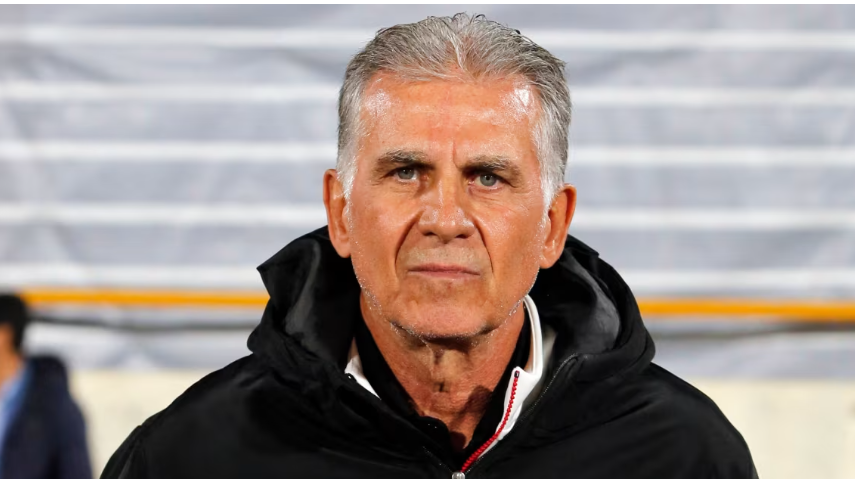
The Ghana Football Association has appointed Carlos Queiroz as head coach of the senior national team, the Black Stars. The former Real Madrid, Manchester United, Portugal, and Iran coach will lead Ghana’s campaign at the 2026 FIFA World Cup in Canada, Mexico, and the United States. Queiroz boasts an extensive World Cup pedigree. He [...] The post Carlos Queiroz appointed Black Stars head coach for 2026 FIFA World Cup first appeared on Sahara Football.
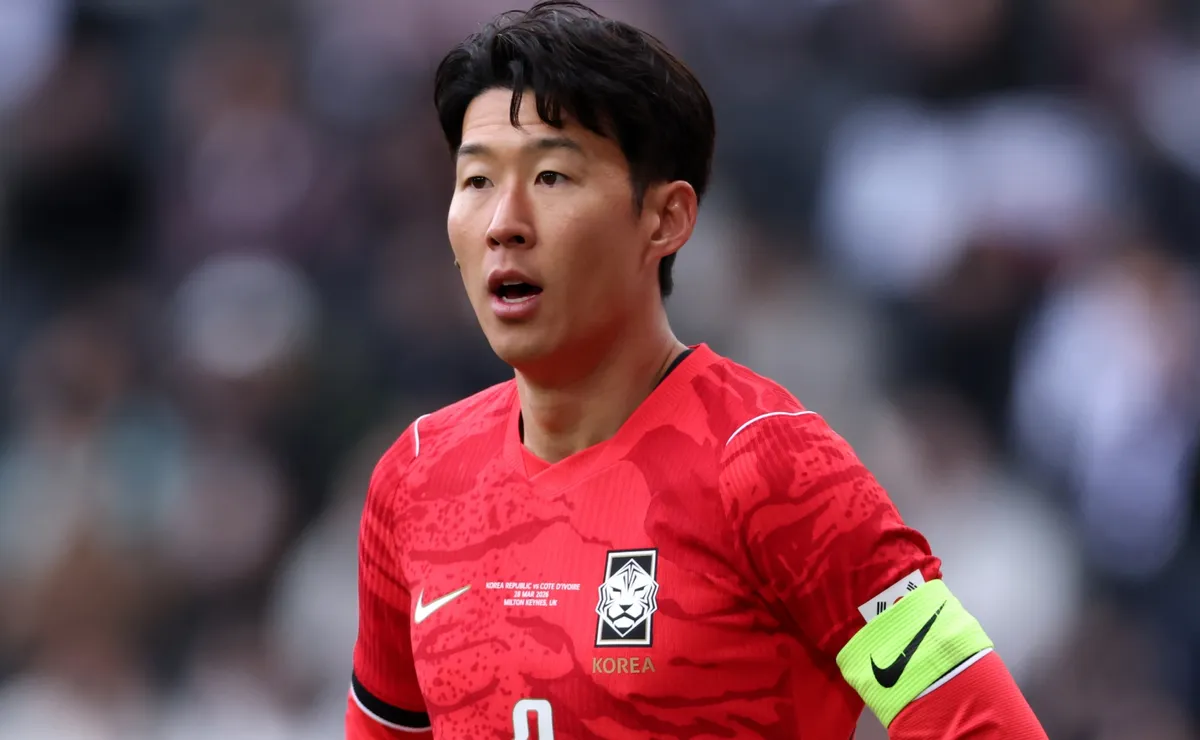
LAFC will face Cruz Azul on Tuesday in the Concacaf Champions Cup, a matchup that could serve as a valuable test for Son Heung-min ahead of the 2026 FIFA World Cup. Son Heung-min will have a useful opportunity ahead of the 2026 FIFA World Cup, as he travels to Mexico on Tuesday with LAFC to face Cruz Azul in the Concacaf Champions Cup, under conditions similar to those he will encounter this summer with South Korea. The clash between Cruz Azul and LAFC will be played at Estadio Cuauhtemoc in Puebla, a city located 7,005 feet above sea level. That makes for unusual match conditions, with differences in climate and oxygen levels that often impact players who are not accustomed to that environment. This will represent an additional challenge for LAFC, considering they drew 0-0 at home in the first leg of the Concacaf Champions Cup quarterfinal series. They will now need to find a goal to gain an advantage and advance to the semifinals, though the task will not be easy. However, for Son, there is also an opportunity to gain experience that could prove crucial ahead of the World Cup set to take place this summer in North America. South Korea are in Group A and will play all three of their group-stage matches on Mexican soil, where altitude will be a key factor to consider. Son playing for LAFC. South Korea’s altitude challenges at the World Cup Of South Korea’s three group-stage matches at the World Cup, one will be played against South Africa at Estadio BBVA in Guadalupe. At just 1,600 feet above sea level, altitude should not pose a major issue for Son and his teammates. However, the other two matches will present a very different scenario. Both South Korea’s opener against the Czech Republic and their following match against Mexico will be played at Estadio Akron in Zapopan, Guadalajara, where altitude becomes a significant factor at 5,154 feet. The match against the Czech Republic will be relatively even in that regard, as both teams will be dealing with unfamiliar conditions. But the real challenge will come in the second match, when they face the hosts, who are naturally far more accustomed to the environment. That is why Son Heung-min’s prior opportunity to play at altitude — and at an even higher elevation like Puebla — could be invaluable preparation for the World Cup.

Most World Cup teams have selected their base camps, where they will train. The sites cover the three co-hosts and include pro, college and high school facilities. Group A:🇲🇽 Mexico Mexico City, Mexico (Centro de Alto Rendimiento)Group matches: Mexico City-Guadalajara-Mexico City🇿🇦 South Africa — Pachuca, Mexico (Universidad del Futbol y Ciencias del Deporte)Group matches: Mexico […] The post World Cup 2026 base camps appeared first on Soccer America.

South Africa goalkeeper and captain Ronwen Williams was just 18 when his country hosted the World Cup in 2010 but can now finally make his tournament bow

ONE of the World Cup host stadiums which cost an astounding $1.3 billion to build looks unrecognizable with only months to go. The soccer World Cup kicks off in Mexico City on June 11 as fellow hosts Mexico take on South Africa in the opener. A mere 1150 miles or so north into the United...

The Black Stars have been left without a manager just 75 days before their first World Cup group game with Panama on June 18.
Bafana Duo Praised By Ex-Czech International Soccer Laduma

Mexico are hosts of what will be their ninth straight World Cup appearance this summer, in what will be a proud moment. The North American side are hoping to be pushing for glory in their home tour…
Bafana's Final WC Group Stage Opponent Confirmed Soccer Laduma
Top 10 Bafana Surprise Call-Ups Under Broos Soccer Laduma
Ivory Coast Thrash Bafana's World Cup Opponents Soccer Laduma
Panama Coach Pays Big Compliment To Bafana Soccer Laduma
Panama Star On Bafana ‘We Know They Are A Difficult Rival’ Soccer Laduma
Revealed: How Zambia Beat Bafana To Argentina Friendly Soccer Laduma
Broos' Warning To Bafana Bafana Players Soccer Laduma
Mbokazi Sinks Ex-Bafana Star, Foster Impressed In England Soccer Laduma
Broos Names Squad: 'Mshishi' & Maseko Return, Chaine Missing Soccer Laduma
Revealed: Why Campbell Missed Broos’ Preliminary Bafana Squad Soccer Laduma
Chibwe: I don't regret choosing Zambia over Bafana Kick Off
Khune: Chiefs star can go to the World Cup with Bafana Kick Off
Mbokazi's coach: Our goals align with Bafana Kick Off

David Luiz on how Brazil would handle the pressure of being World Cup hosts in 2014 This piece was written by Rupert Fryer for issue 13. I was standing in a hallway at Soccer City in Johannesburg. Brazil had just finished training ahead of their March friendly with South Africa and I had agreed to […] The post Sideshow takes Centre Stage appeared first on The Blizzard.

While most fans were focused on the 1974 World Cup, George Best was playing in South Africa. This piece was written by Luke Alfred for issue 14 Banned from international competition and unable to watch the 1974 World Cup on television, South African club owners devised a cunning plan. In a bid to boost home […] The post Best in Show appeared first on The Blizzard.
Kalou after Downs game: Now I understand why Bafana are doing well Kick Off
Six Goals Conceded: Bafana’s Shield Cracks At AFCON Soccer Laduma
)
South Africa vs Cameroon: Indomitable Lions roar past Bafana Bafana to set up Morocco quarter-final Pulse Sports Nigeria
AFCON 2025: Zimbabwe vs South Africa preview, prediction, team news and head-to-head Pulse Sports Nigeria
7 big-name stars who could face Bafana Kick Off
Bafana’ World Cup match schedule details… Kick Off
Ngubane: Bafana must play Germany Or Brazil Kick Off
How much SAFA could pocket for qualifying for 2026 World Cup Kick Off
Bafana team manager not off the hook? Kick Off

On Wednesday's Football Daily, Phil Egan brings you the fallout from last night's Republic of Ireland 1-0 win over Armenia in the World Cup Qualifiers in Dublin. Heimir Hallgrimsson happy with the three points, and glosses over the performance. Richie Towell questions who can step up in the absence of Jayson Molumby and Ryan Manning. Stuey Byrne on a shaky night for the Boys in Green. England book their World Cup spot. The Bafana Bafana are back. And Trump warns US cities ahead of next summer's tournament. Become a member and subscribe at offtheball.com/join Football Daily with thanks to #Toyota #BigBrotherBigSister
The United States Men’s National Team edged Australia 2–1 in a gritty international friendly, with Haji Wright delivering both goals to seal the win. Despite an early setback and a Christian Pulisic injury scare, Mauricio Pochettino’s men showed resilience and attacking intent. Is Matt Freese your in-pen-starter next summer in goal? Alexi Lalas & David Mosse also give updates on World Cup Qualifying around the globe: Cape Verde, South Africa and others punched their tickets, while England cruised behind Harry Kane and Ronaldo broke a qualifying record. Intro: (0:00)Matt Freese is your starter (3:55)Christian Pulisic injured (4:50)Cristian Roldan on 2026 World Cup roster (9:40)USYNT knocked out of U20 World Cup (23:26)2026 FIFA World Cup Qualifying Recap (26:14) Learn more about your ad choices. Visit podcastchoices.com/adchoices

Mark Chapman and Rory Smith continue the countdown to the 2026 World Cup. Nico Cantor from CBS Sports and Mexican sports journalist Marion Reimers look at Mexico, who will host nine of the tournament’s 104 matches. How will they fare as one of the tournament’s hosts? Can they finally shake off the tag of ‘dark horses’? Former South Africa captain Dean Furman and former Nigeria international Efan Ekoku discuss some of the African teams who may qualify – how are South Africa and Nigeria faring? Plus hear from Cape Verde and Shamrock Rovers defender Roberto Lopes with his country on the edge of qualification for their first ever World Cup. 02.40 – Mexico 24.20 – Bigger picture for African teams 43.45 – Cape Verde
FIFA 'Clears' Bafana in Qualifier Dispute Soccer Laduma
Nigeria Suffer Big Blow Ahead Of Bafana Clash Soccer Laduma
Showing 1-50 of 76 articles
Publications
Browse by source
Authors
Browse by writer
Topics
Browse by tag
Media
Articles, Pods, Videos